Jane Goodall’s Roots & Shoots:
A Global Framework for CAS Programme

The Challenge: Finding Meaningful CAS Projects
We understand that the CAS Project is central to the The International Baccalaureate (IB) Diploma Programme, requiring students to engage in a "collaborative series of sequential experiences" that lasts at least one month. Finding opportunities that are student-initiated, globally relevant, and locally impactful can be challenging.
Why Choose Roots & Shoots for
Your Students' CAS Project?
Founded by Dr. Jane Goodall, Roots & Shoots is not just an environmental club; it is a global youth empowerment program. We provide a structured annual framework where students lead the way—perfectly aligning with the CAS requirement for students to "initiate and plan" their experiences.
.png)
Roots & Shoots School Action Group
By establishing a Roots & Shoots School Action Group, your students join a network spanning 60+ countries, gaining a platform to demonstrate International Mindedness while taking action on campus.
Unlike one-off volunteering events, the Roots & Shoots School Action Group provides a structured yet flexible framework that satisfies the rigorous requirements of the IB Diploma "CAS Project."
Programs Overview:
Roots & Shoots School Action Group
This core module is designed to be accessible, flexible, and student-driven.
How It Works:
-
Students: If you wish to start a group on campus, first share this idea with your teacher and invite them to act as an advisor. Next, contact the Institute; we will work together with your teacher to help you establish the group.
-
Teachers: You can integrate this into existing environmental clubs or extracurricular activities to lead student participation.
Your Stage: Limitless Action
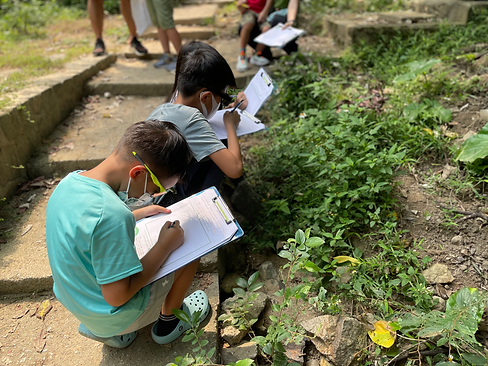
While the school is your base, your actions are not limited by its walls! You can start by improving the campus environment and eventually lead your classmates out of the school gates to extend your green influence into the wider community.
Our Goal:
A Progressive Learning Model Our objective is to guide students through a scaffolded journey
The 5-Stage "CAS Cycle" Our program structure mirrors the CAS stages of Investigation, Preparation, Action, and Reflection. A typical year-long Roots & Shoots engagement involves:

1. Investigation (Learning)
JGIHK provides educational activities and workshops on sustainability and Dr. Jane’s philosophy to inspire students.

2. Preparation (Brainstorming)
a. DP Level: Senior students are required to "brainstorm and initiate" their own solutions rather than just following instructions.
b. PYP/MYP Level: we provide guidance to assist them in brainstorming and reviewing the actions they intend to take.


3. Action (Implementation)
4. Reflection (Review)
Students execute their project (see examples below).
Every student completes a "Learning Review" form to document their growth—providing ready-made evidence for their CAS portfolios.

5. Demonstration
(Advocacy & Recognition)
Students organize a showcase to share their impact with the community and learn sustainable fundraising skills to support future cohorts.
專業導師
Our Professional Tutor
Ana Maria Da Roza
-
Advanced certificate in Psychology
-
8 years of teaching experience
-
Experienced in supporting the academic and personal development of children and adolescents
-
5 years in public speaking and TV hosting

Real World Examples:
Mapping Projects to CAS Strands
What does a Roots & Shoots project look like? Here are four successful student-led initiatives from our network that perfectly demonstrate the Creativity, Activity, and Service strands.
Primary Years Programme (PYP) / Middle Years Programme (MYP)

1. Future Engineers: The Marine Debris Skimmer
-
Strands: Creativity (Design Thinking) + Service (Environmental Protection)
-
Concept: Focusing on STEM skills, students identify the problem of microplastics or floating debris. They sketch, blueprint, and build a physical prototype of a machine designed to clean seawater without harming aquatic animals.
-
CAS Outcome: Demonstrate that challenges have been undertaken, developing new skills in the process; Demonstrate how to initiate and plan a CAS experience.

2. Trash to Treasure:
The Sea Glass Social Enterprise
-
Strands: Creativity (Arts & Crafts) + Service (Fundraising)
-
Concept: Following a beach cleanup, students segregate safe debris (like sea glass or driftwood). They upcycle these materials into art pieces or jewelry and hold a charity sale, with proceeds donated to environmental conservation.
-
CAS Outcome: Recognize and consider the ethics of choices and actions; Show commitment to and perseverance in CAS experiences.

3. Digital Storytelling: "Voice for the Ocean"
-
Strands: Creativity (Videomaking) + Service (Advocacy)
-
Concept: Students research the impact of plastic pollution on marine life. Instead of a standard report, they script, film, and direct a short awareness video to be posted on school social media channels to raise awareness among peers and parents.
-
CAS Outcome: Demonstrate engagement with issues of global significance; Demonstrate the skills and recognize the benefits of working collaboratively.
Diploma Programme (DP)
.png)
1. The "21-Day Green Habit" Challenge
-
Strands: Creativity (Campaign Design) + Service (Advocacy)
-
Concept: Students research the theory that habits form in 21 days. They design a school-wide challenge urging peers to adopt one sustainable habit (e.g., vegan lunches) for three weeks.
-
CAS Outcome: Demonstrate that challenges have been undertaken; Demonstrate engagement with issues of global significance.

3. Engineering Inclusion:
The Accessible Food Waste Recycler
-
Strands: Creativity (Product Design) + Service (Social Inclusion)
-
Concept: Students identify that standard recycling bins are often inaccessible for wheelchair users or smaller children. They re-engineer the bin to include a lower, accessible chute and an improved ventilation system to contain odors, ensuring dignity and hygiene for all users.
-
CAS Outcome: Demonstrate how to initiate and plan a CAS experience; Demonstrate the skills and recognize the benefits of working collaboratively.
.jpeg)
2. The "My Wardrobe" Database App
-
Strands: Creativity (Tech Innovation) + Service (Reducing Waste)
-
Concept: To tackle fast fashion and over-consumption, students design an app prototype that helps users catalog their existing clothes. Users "shop their own closets" before buying new items, reducing textile waste.
-
CAS Outcome: Identify own strengths and develop areas for growth (coding/UX skills); Recognize and consider the ethics of choices and actions.
.jpg)
4. The "Circular Canteen" Campaign
-
Strands: Service (Waste Reduction) + Activity (Gardening)
-
Concept: A "Clean Plate" reward system incentivizes students to reduce food waste. Unavoidable waste is collected and composted by the students to create fertilizer for the school garden, closing the nutrient loop.
-
CAS Outcome: Show commitment to and perseverance in CAS experiences; Understand they are members of local and global communities.

How We Support Your CAS Requirements
The Roots & Shoots School Action Group model is designed to naturally generate the evidence
students need for their portfolios.
CAS Requirement
How Roots & Shoots Delivers

Collaborative Series of Experiences
Students form a committee (Action Group) that runs for at least 12 months.

Authentic Need
Projects are based on the UN Sustainable Development Goals (SDGs) and local community needs.

Student Initiative
Our "Start a Group" model requires students to recruit members, set agendas, and manage budgets—teachers act only as advisors.

Global Context
Students learn that they are part of a movement started by Dr. Jane Goodall, connecting their local school projects to global conservation efforts.
Evidence for the CAS Portfolio

Participating in a Roots & Shoots Action Group provides tangible evidence for the student's portfolio:
-
Official Certificate: Awarded upon completion.
-
Recommendation Letters: For student leaders who demonstrate exceptional initiative and fundraising success.
-
Structured Reflections: Our Learning Review forms guide students to reflect on their personal growth and global impact.
Roots & Shoots CAS Program Advantages

1. Annual "Change-Makers" Showcase Platform
-
The Reward: Students are invited to host and present at the Annual Results Sharing Meeting (Learning Review Exhibition).
-
The Benefit: A formal platform to present their work to parents, teachers, and the public.
-
Why it matters: This satisfies the CAS requirement for "Demonstration" and provides public speaking experience, allowing students to advocate for their green vision.

2. Practical Leadership & Management Skills
-
The Reward: Direct experience in the "Start a Group" model.
-
The Benefit: Unlike standard volunteering, students gain "Executive" experience. They must recruit 6-10 partners , decide on the annual direction , and allocate work.
-
Why it matters: This provides concrete evidence for university applications regarding leadership, communication, and project management skills.

3. Resource Sustainability Training (Fundraising)
-
The Reward: Mentorship on how to run a sustainable organization.
-
The Benefit: Students learn to plan activities (e.g., online fundraisers, charity sales) to gain support for their group.
-
Why it matters: Students who successfully secure donation support for the group's development receive specific praise and recognition, demonstrating they understand the "ethics of choices" and "resource sustainability".

4. Global Network Connection
-
The Reward: Membership in the Roots & Shoots School Network.
-
The Benefit: Connection to a worldwide program founded by Dr. Jane Goodall, learning about her spirit and global sustainable development issues.
Next Steps for Teachers
Join the Movement:
Empower your students to take the lead. Contact us to launch a Roots & Shoots School Action Group at your campus.
Contact Us
Ana | 70931478 | info@rootsandshootshk.com
Sean | 55091779 | sean.wong@janegoodall.org.hk


Join 2025 Roots & Shoots
School Action Group (A Global
Framework for CAS Programme)